Last updated November 23, 2026
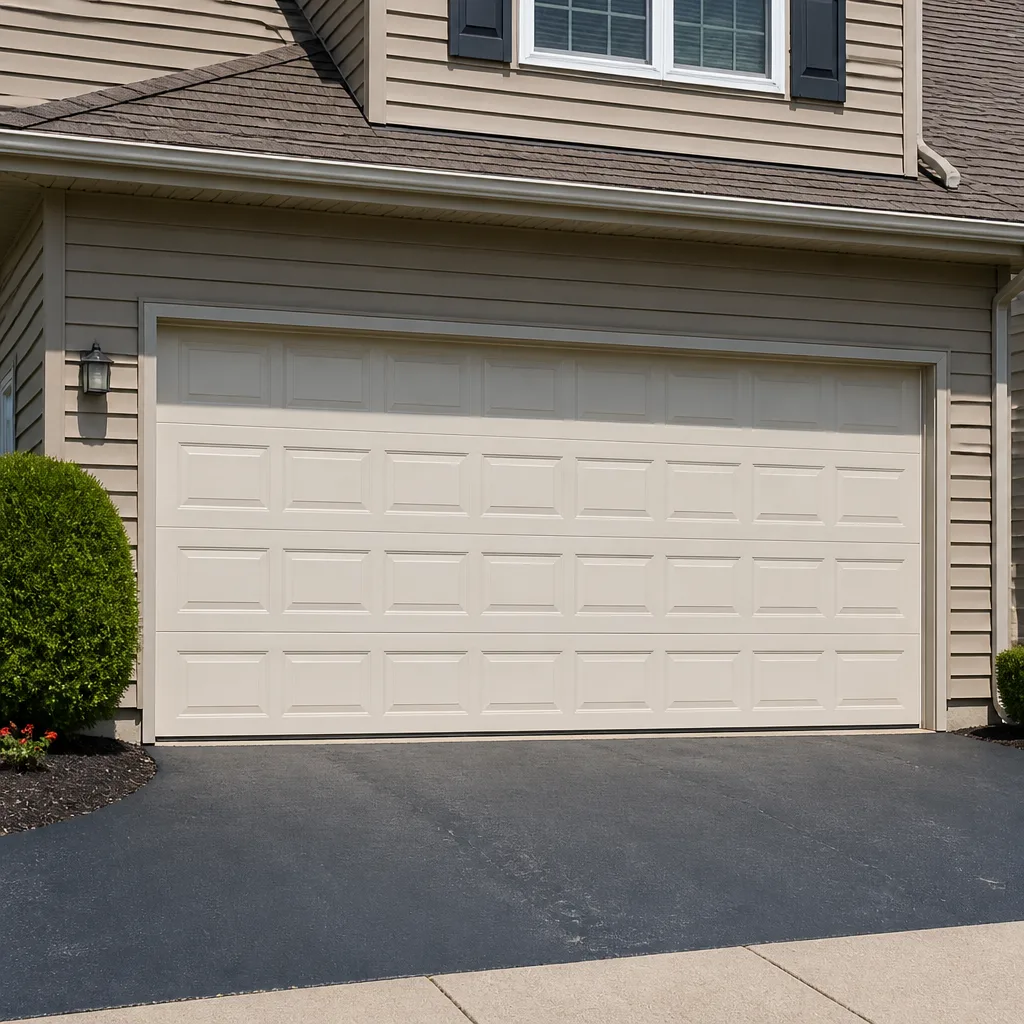 Raised-panel steel
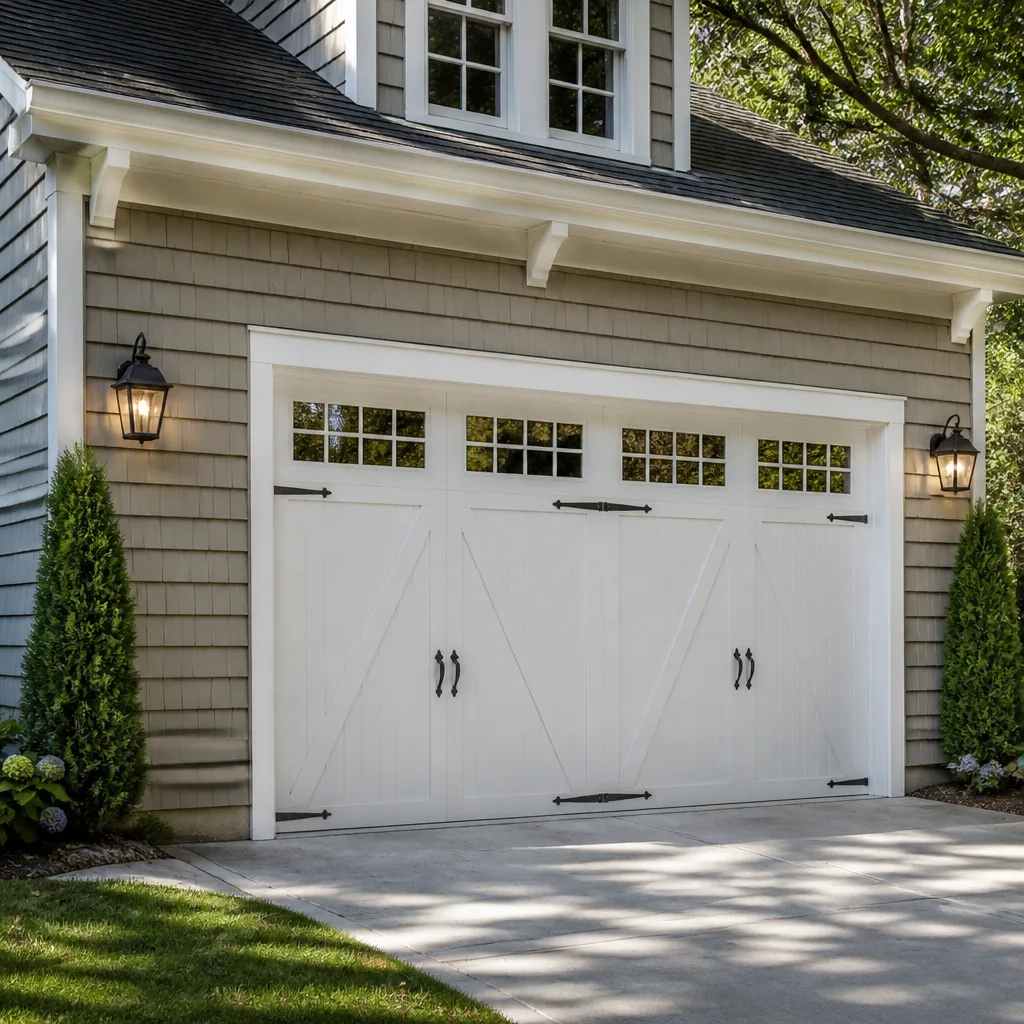 Carriage house
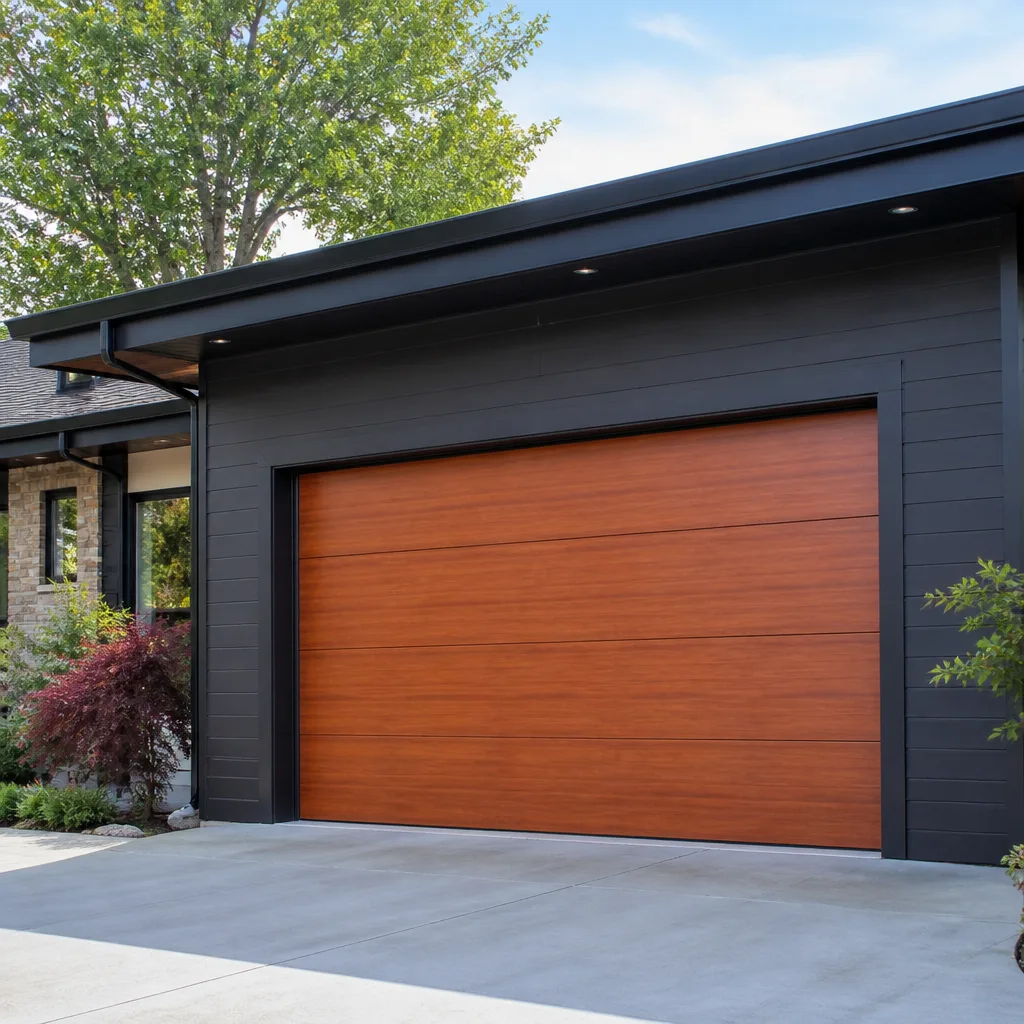 Modern flush
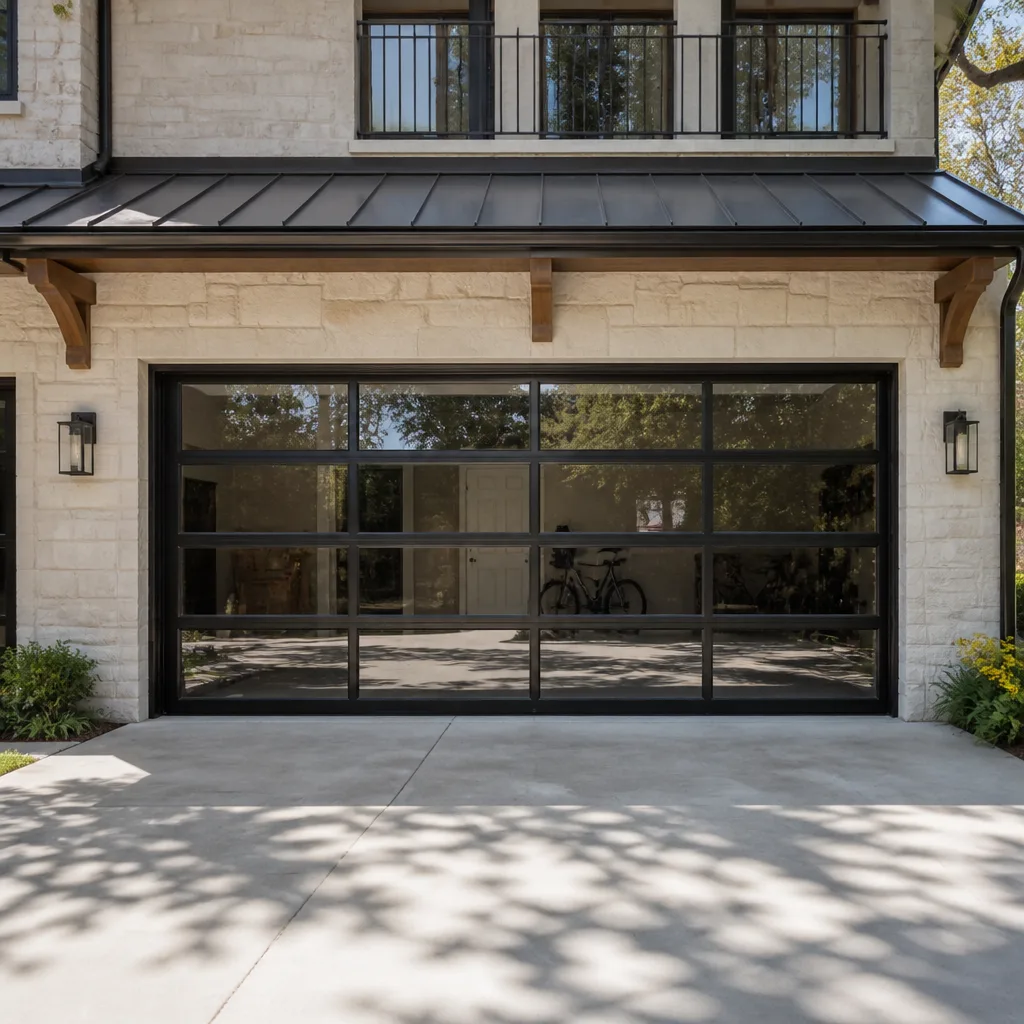 Full-view glass
 LiftMaster openers
 Chamberlain openers
Full 25-point door and opener safety check with every visit - springs, cables, rollers, tracks, and your LiftMaster or Chamberlain opener included
You get a price before we start. It does not change when the pro arrives.
Get your free estimateHow to Hire a Garage Door Contractor in Milford: A Step-by-Step Guide
Three of the most common garage door scams in Connecticut start the same way: a quote given over the phone without seeing the door. It sounds convenient. It saves you twenty minutes. And it’s the single clearest signal that the person on the other end intends to give you a number now and a different number later, once your door is already apart and your car is already trapped. We work on your brand every day, and we’ve watched homeowners in Milford pay twice for one repair because they accepted a price before anyone measured the opening.
This guide shows you how to screen a contractor before they arrive, how to read a written estimate line by line, what Connecticut credentials actually mean, and the questions that separate a garage door specialist from a general handyman with a truck.
Quick Answer
To hire a garage door contractor in Milford, verify what the contractor is legally allowed to claim for trade licensing in Connecticut, insist on an in-person assessment of the door, springs and opener before any price is quoted, and get a written estimate with labor, parts, disposal and service fee as separate line items. Ask whether the technician works on your existing brand. A contractor who only sells one manufacturer’s product line will steer you toward a replacement you may not need.
Styles & brands we work with
- Raised-panel steel
- Carriage house
- Modern flush
- Full-view glass
- LiftMaster openers
- Chamberlain openers
Table of Contents
- Why a Phone Quote Is a Red Flag, Not a Convenience
- What Connecticut Licensing Actually Requires (And What It Doesn’t)
- How to Read a Written Garage Door Estimate
- Questions That Reveal Multi-Brand Fluency
- What a Warranty Should Cover in Writing
- Spring Repair: The Part Most Often Mishandled
- When Replacement Beats Repair in Milford Homes
- Common Mistakes to Avoid
Why a Phone Quote Is a Red Flag, Not a Convenience
A garage door price cannot be calculated from the sound of your voice. Every door we assess has at least four variables that change what the job costs: the size and weight of the door, the spring type and wire gauge currently on it, the condition of the track and rollers, and the model and age of the opener. A contractor who quotes you $295 for a spring replacement over the phone is either guessing at the most common configuration or assuming the worst and lowering the number once they’re in your driveway.
Here’s what an actual assessment involves. The technician measures the opening, not just the door panel. They identify the spring type (torsion or extension), measure the wire size if it’s a torsion setup, and check whether the previous spring matches the door’s weight or was replaced with whatever was on the truck that day. They run the opener through a full cycle, check the balance of the door by hand, and look at the rollers, hinges and bottom seal.
None of that takes long. What it does take is someone physically present. In our experience, the phone-quote pattern correlates strongly with three follow-on problems:
- The price climbs on arrival. The quoted number was for a “standard” job. Yours isn’t standard once they look at it.
- The upsell replaces the repair. A contractor who pre-committed to a low repair number needs to recover margin somewhere, and a full door replacement carries much more of it.
- There’s no written record. A number spoken on a phone call can’t be compared, disputed or held anyone to.
If your door is stuck open, off its track or hanging from a snapped spring, an emergency call to Milford Garage Door Repair Pros gets a technician out to assess it in person, and the price you agree to is the price before work begins. That’s the opposite order of operations from a phone quote, and it’s the one that protects you.
What Connecticut Licensing Actually Requires (And What It Doesn’t)
Connecticut regulates home improvement contractors at the state level, and the specific registration a garage door professional should be able to produce depends on the scope of work being performed. A contractor doing structural or major home improvement work should be registered with the state as a home improvement contractor and carry the corresponding registration number on their contracts and advertising. If a company advertises itself as licensed, ask what license or registration class it holds and for the number, then verify it. Any contractor who hesitates, deflects, or tells you that licensing isn’t required for garage doors is telling you something useful.
What a garage door contractor is legally allowed to claim is narrower than what many of them do claim. Terms get thrown around loosely in the trade, and the gap between what’s on a website and what’s on a certificate is where Milford homeowners get burned. Here’s how to close it:
- Ask for the registration or license number in writing, on the estimate, not just spoken aloud.
- Verify it yourself with the state agency that issues it. This takes minutes and is the single highest-value check in this guide.
- Ask for a certificate of insurance showing general liability coverage, and confirm the policy is current, not expired. If an uninsured technician is injured on your property, that exposure lands on your homeowner’s policy.
- Check that the business name on the estimate matches the name on the insurance certificate and the registration. Mismatches are a warning sign.
- Ask who will actually be on site. A registered company can still send a subcontractor. Ask whether the technician doing the work is directly accountable to the company quoting you.
This matters more in Milford than in a large metro, because the local market is small and the barrier to entry is low. Anyone with a truck, a ladder and a set of winding bars can advertise garage door work. The state registration and insurance certificate are what separate a business from a person with tools.
How to Read a Written Garage Door Estimate
A written garage door estimate in Milford should have separate line items for labor, parts, disposal and any service or trip fee. When those four things are bundled into one round number, the markup on parts is invisible and you have no way to compare two quotes honestly. Ask for the breakdown before you sign anything, and expect to get it.
Here’s a rough shape of what the line items typically look like, as estimated ranges. These are typical for the Milford area and are not a quote; the written estimate you receive sets the final price.
- Torsion spring replacement (single spring): typically $180 to $340 depending on wire size and door weight. A matched pair is usually replaced together, so a pair runs about twice a single-spring range.
- Extension spring replacement: typically in a similar range per spring, though older setups sometimes require hardware updates that change the total.
- Opener repair or replacement: varies widely by whether the unit is repairable (a gear, a capacitor, a travel limit) or needs full replacement, including labor for the new unit and reconnection of safety sensors.
- Rollers, hinges and cables: usually modest per-piece parts, but the count matters. A full roller set on a double door is a different job from two rollers.
- Disposal: should be a visible line. Old springs, panels and openers have to go somewhere.
- Service or trip fee: some contractors charge one, some fold it into labor. Either is fine if it’s disclosed.
Two bundled-quote patterns to watch for specifically. First, a single “spring and tune-up package” price that hides which spring you’re getting, because wire gauge drives cost and a cheaper spring is tempting to substitute. Second, a “complete door overhaul” number that includes parts you didn’t ask about and can’t evaluate. If you can’t see the parts, you can’t judge the price.
For a more detailed breakdown by service type, see our guide to garage door repair in Milford.
Questions That Reveal Multi-Brand Fluency
The fastest way to find out whether a contractor works on your equipment or only sells one brand is to ask about the brand you already own. If you have a LiftMaster opener and a Raynor door, a contractor who only stocks and services one manufacturer’s line has an incentive to tell you the whole system needs replacing. A contractor who works across brands can repair what’s on the house.
Our technicians work on LiftMaster, Chamberlain, Genie, and Craftsman openers, and on Clopay, Amarr, Wayne Dalton, and Raynor doors, alongside the other systems already installed on Milford homes. That range matters because most homes here don’t have a matched set. A door installed a decade ago, an opener replaced five years later, and a spring swapped out by whoever was available at the time is the normal situation, not the exception.
Ask these questions before booking:
- What brand of opener do I have, and what’s the typical repair path for it? If they describe your specific unit’s common failure points, they know the line.
- Do you stock or source springs by wire gauge, or do you install a standard size? A properly matched spring is calculated to the door’s weight.
- Which door manufacturers do you install, and can you show me product options from more than one? For installation guidance on Clopay, Amarr, Wayne Dalton or Raynor, a specialist should be able to compare them by construction and insulation rather than pushing the one line they carry.
- If my opener is repairable, will you repair it or default to replacement?
- Can you service a door and opener from two different brands in the same visit?
One company handling diagnostics, spring work, panel repair and a full new door installation means no handoff, no second assessment fee, and no one telling you that the previous contractor’s work is the reason they can’t help. For opener-specific work, our garage door opener repair page covers the common failure modes by brand.
What a Warranty Should Cover in Writing
A verbal warranty is worth nothing the moment the person who gave it stops answering their phone. What you want, in writing and on the estimate or contract, is a statement of what’s covered, for how long, by whom, and what happens if the part fails. This is where Milford homeowners most often get complacent, because a friendly technician who says “you’re covered if anything goes wrong” sounds like a warranty. It isn’t one.
Check three things:
- Parts coverage, separately from labor. Many manufacturers warranty springs and openers for a defined period. But a manufacturer’s warranty on a part doesn’t cover the labor to install the replacement, which is often the larger share of the cost. Ask what the contractor warrants on labor, in writing.
- Who honors it. If the company disappears, does the manufacturer honor anything directly? Get the manufacturer’s warranty documentation for any new opener or door at the time of installation.
- What voids it. Improper installation, an unbalanced door, or work done by someone else afterward can void coverage. Know the terms before you sign.
Six months after a spring replacement, a failed spring tells you something. If it’s a matched wire gauge and a proper cycle count, it should have lasted far longer. A warranty that only covers the part and not the labor leaves you paying the installation cost a second time. Ask yourself: if this fails in six months, what exactly am I out? If the answer isn’t clear from the paperwork, ask until it is.
Spring Repair: The Part Most Often Mishandled
Springs are the most dangerous part of your garage door system, and they are also the most commonly replaced with the wrong part. A torsion spring under tension stores enough energy to cause serious injury, which is why this is one repair we’d never coach a homeowner through by phone or online. If your spring has snapped, leave the door closed, keep the area clear, and call a trained professional. Do not attempt to wind, unwind or remove the assembly yourself.
The safety side matters, but the technical side is where the money goes. Springs are engineered to a door’s specific weight, and a replacement must match in wire gauge, inside diameter, and length. A technician who installs “whatever fits” gets the door moving again, but the door may not be balanced, the opener works harder, and the spring’s service life drops. In our experience, this is the most common source of repeat spring failures on Milford homes: the previous replacement was the wrong specification.
What a proper spring job includes:
- Identifying the spring type and measuring the existing assembly before ordering a replacement.
- Matching the new spring to the door’s weight and confirming the door balances correctly when tested by hand.
- Checking cables and drums at the same time, since a spring failure often loads those components.
- Testing the opener’s force settings after the repair, because they were set for the old spring.
For Milford homes with a matched pair, most technicians will replace both springs together, since the second one has seen the same cycles as the first. That means a pair costs about twice the single-spring range. Our garage door spring repair page has more on the process and what to check before you call.
When Replacement Beats Repair in Milford Homes
In our experience, Milford’s mix of older housing stock and winter-driven road salt spray means garage doors here see real wear: bottom seals crack from freeze-thaw cycles, track rusts along the floor line, and panel hardware loosens after enough seasons of thermal movement. If your door is over roughly fifteen years old and needs repairs across multiple systems, the math starts favoring replacement. A door that needs springs, cables, rollers and a bottom seal in one visit is a door that’s telling you something.
But “needs replacement” should be a conclusion you reach with information, not one a technician reaches in the driveway with a brochure. Get a written repair estimate for the existing door first. Then, if replacement is on the table, ask for a comparison of door options from more than one manufacturer, with insulation values, construction material and hardware differences spelled out. Clopay, Amarr, Wayne Dalton and Raynor all make doors suited to different price points and insulation needs, and a knowledgeable installer will help you see the differences rather than steer you to one line.
Installation is measured work, not same-day work. The door has to be measured against the opening, ordered, and scheduled. Anyone offering to install a new door the same day isn’t installing a door built for your opening.
Common Mistakes to Avoid
- Accepting a phone quote. A price given without measuring the opening, checking spring size and testing the opener is a sales tactic, not an estimate. Insist on an in-person assessment before any number is offered.
- Skipping the state registration check. Connecticut requires home improvement contractors to register with the state and carry insurance. Ask for the number and certificate, then verify both. It takes five minutes.
- Comparing bundled quotes. Two contractors quoting “a spring tune-up” for different prices aren’t necessarily offering different value, because the parts may not be equivalent. Ask for line items before you compare.
- Trusting a verbal warranty. If the labor warranty isn’t in writing on the estimate, assume it doesn’t exist. Ask what happens if the part fails in six months and what you’d pay to fix it.
- Letting a single-brand contractor assess a multi-brand system. If you have a LiftMaster opener and a Wayne Dalton door, a contractor who only services one brand has a built-in incentive to recommend replacement of the other.
- Treating a spring failure as a DIY job. Torsion springs are under extreme tension. A snapped spring is an emergency call, not a project.
- Paying for a “free tune-up” that isn’t free. A tune-up that costs nothing usually ends with an upsell. Ask what the tune-up includes and whether the technician is authorized to perform repairs on the spot.
See the difference
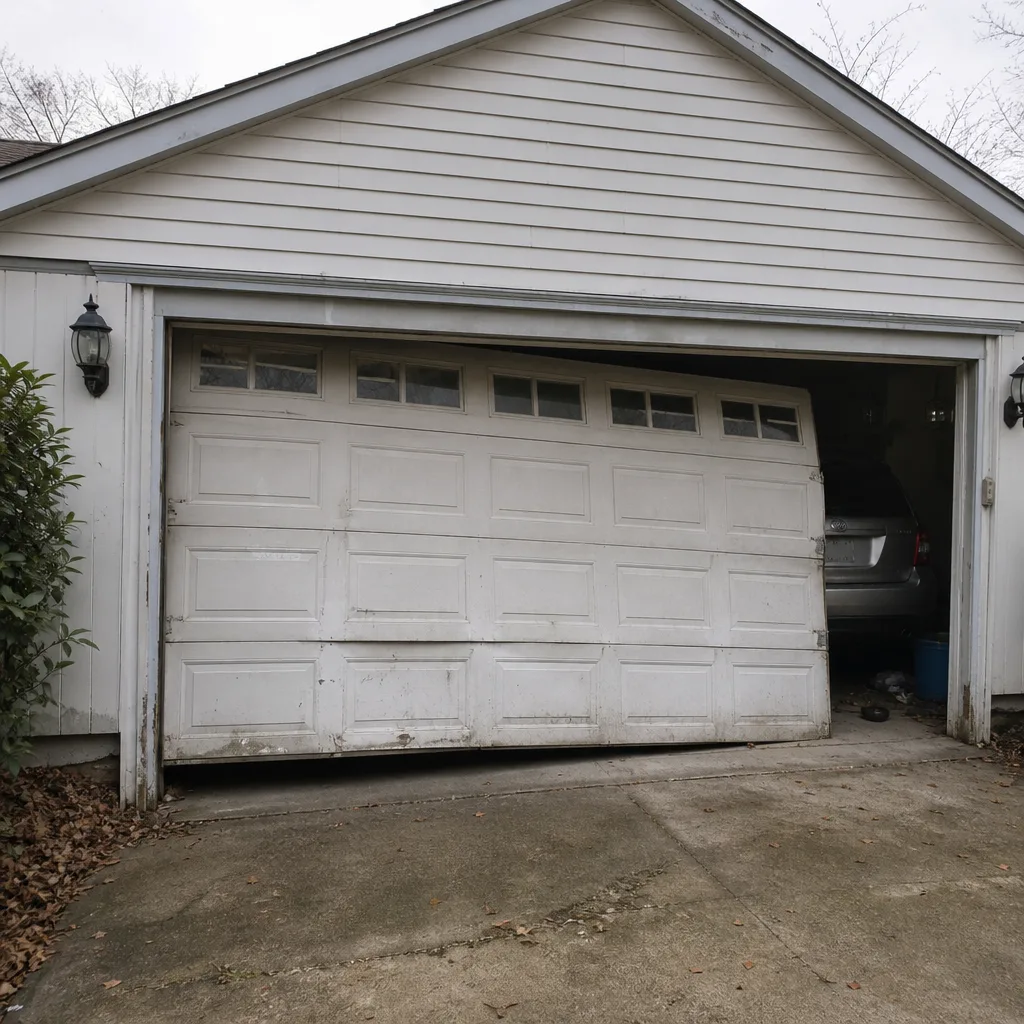 Before
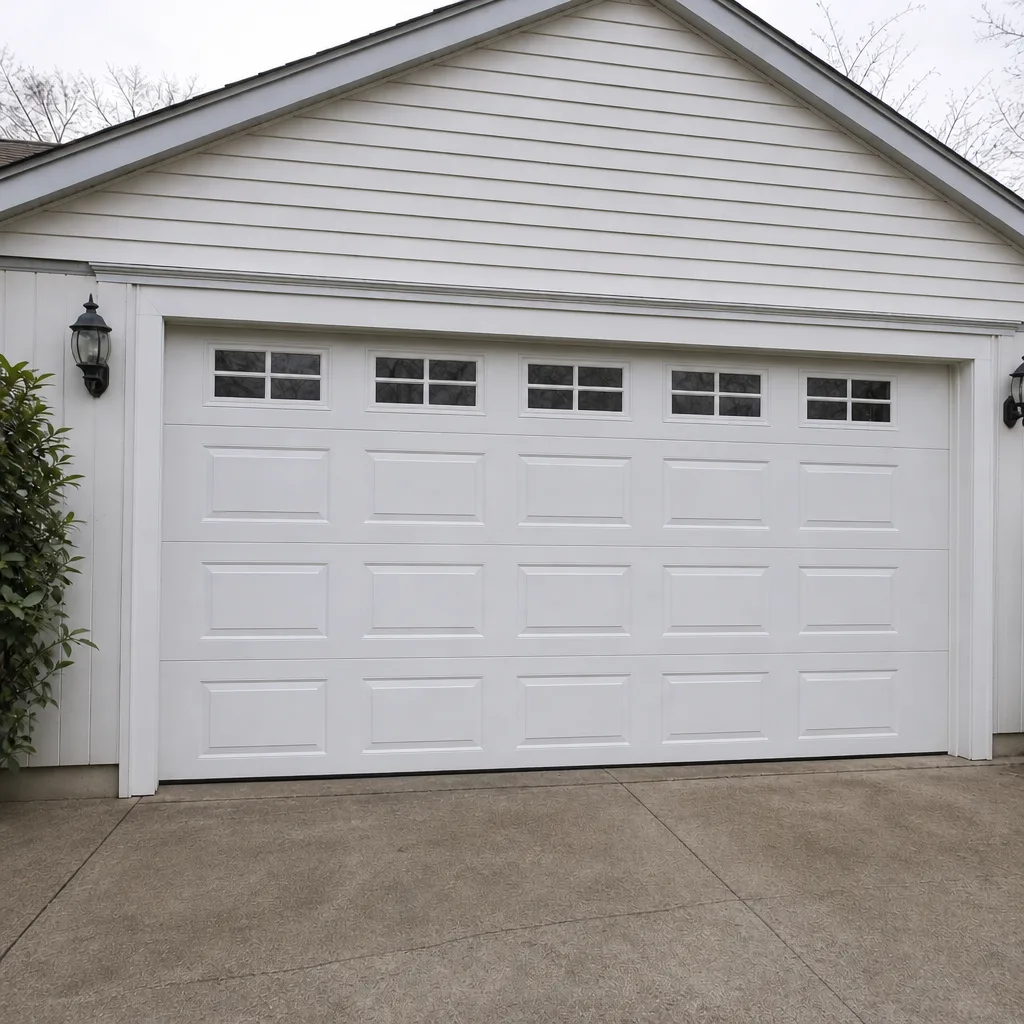 After
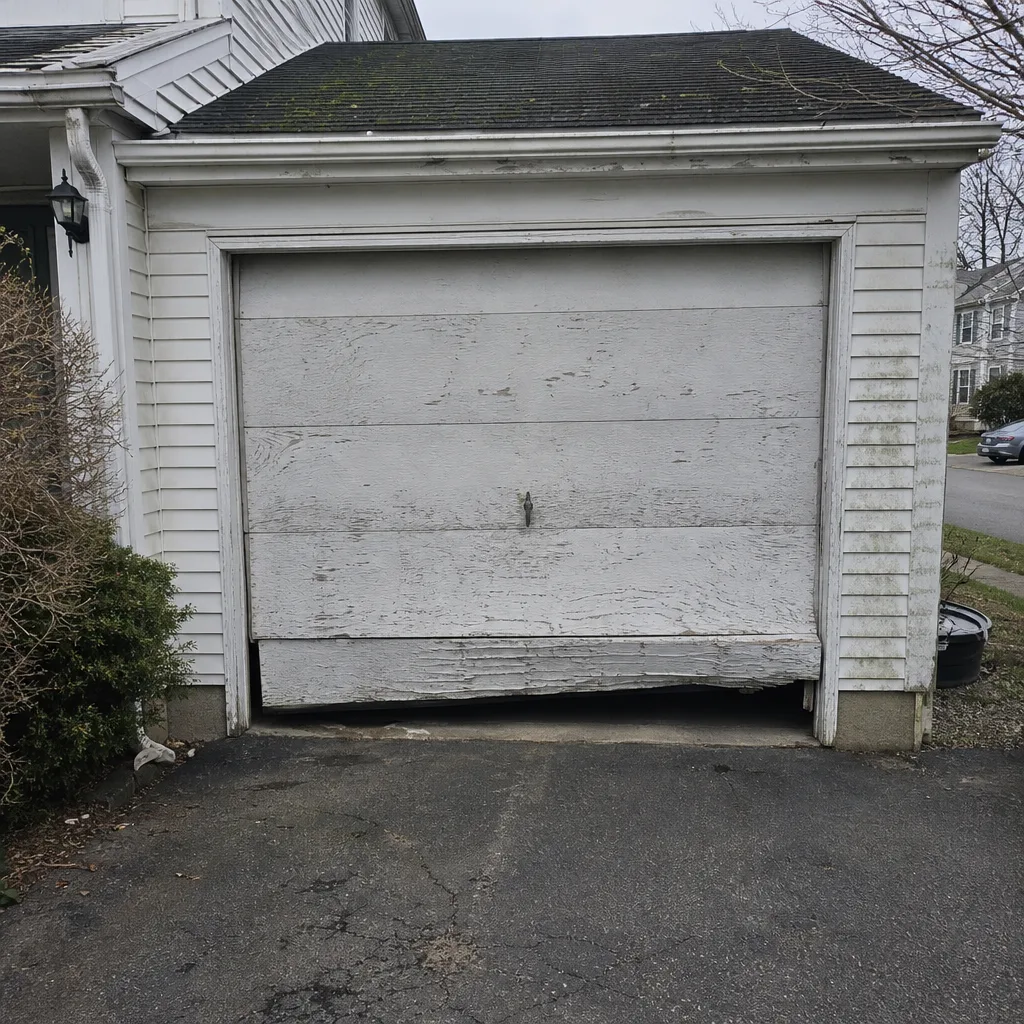 Before
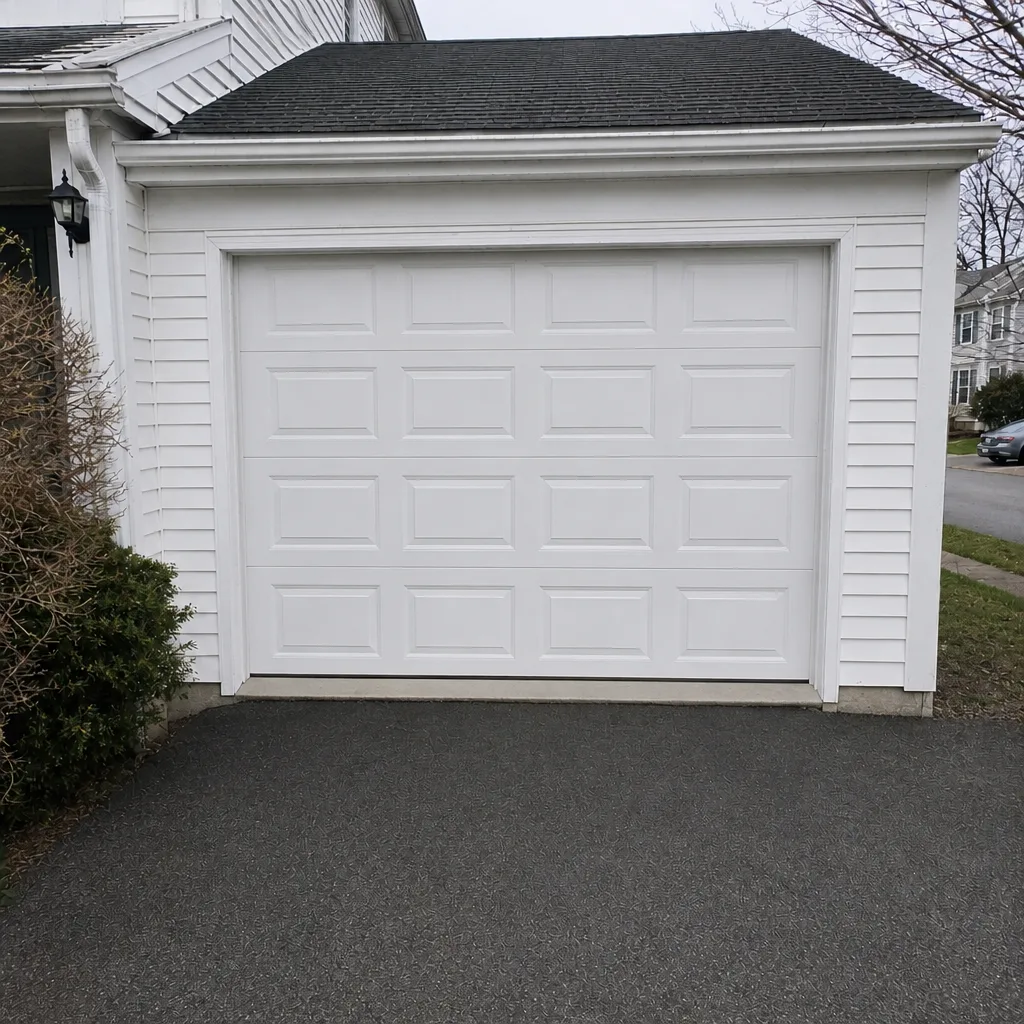 After
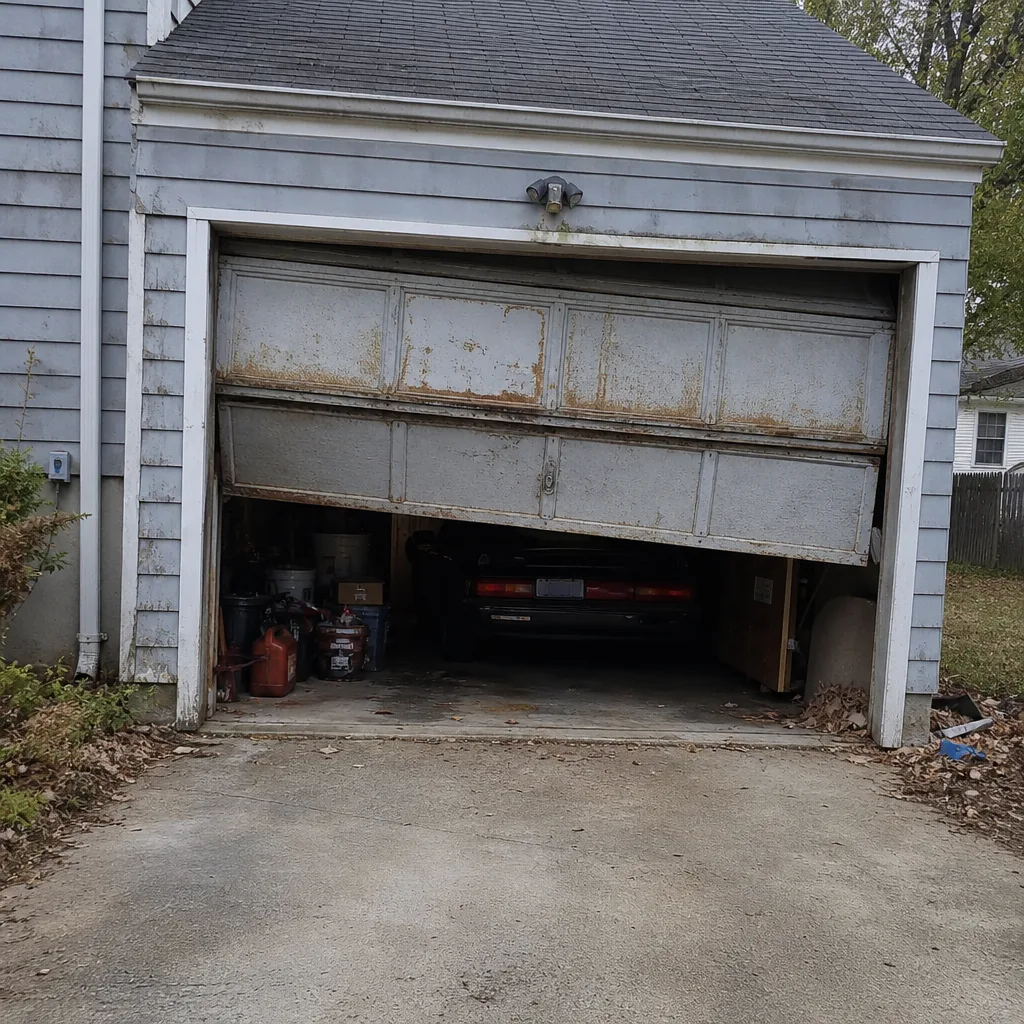 Before
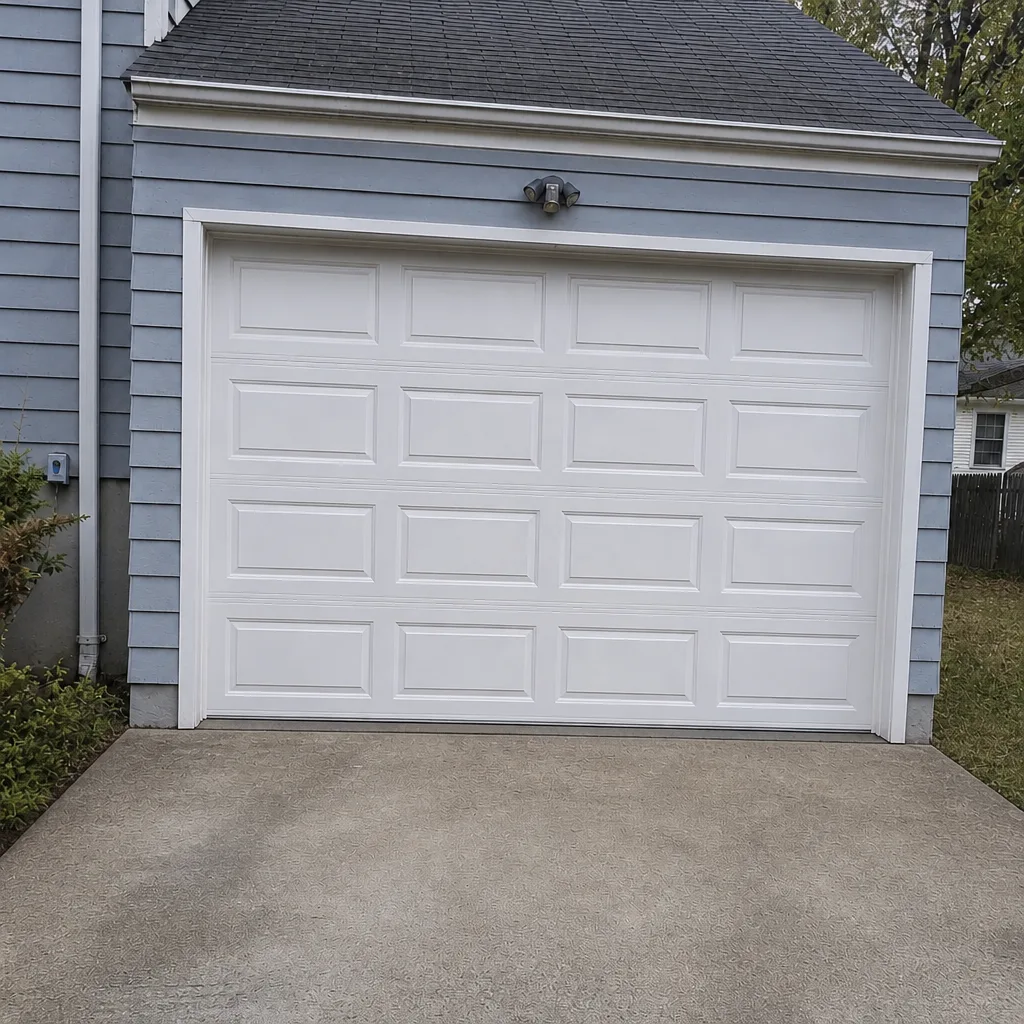 After
When to Call a Professional
Some garage door problems are cosmetic. Others are dangerous or leave your home unsecured. Call a trained professional when a spring has snapped, a cable has come loose from its drum, the door is off its track or tilted in the opening, the opener runs but the door doesn’t move, or the door won’t close fully and reverses. Also call when a door is stuck open, since your vehicle and belongings are exposed until it’s fixed. If a door fails on a Saturday, call and we’ll book you for Sunday: springs and balance issues don’t improve with waiting, and an unsecured door is a real risk. Milford Garage Door Repair Pros offers free estimates in Milford. Call (855) 764-1660 and we’ll get the right technician on it.
Frequently Asked Questions
A single torsion spring repair in Milford typically costs $180 to $340, depending on the wire size and door weight. A matched pair, which is usually replaced together, runs about twice that. The written estimate sets the final price, and it’s quoted before any work starts. Call (855) 764-1660 for an exact quote; estimates are free.
We don’t quote garage door repairs over the phone, and you should be wary of anyone who does. The right price depends on the door’s weight, spring type, track condition and opener model, none of which can be assessed from a call. A technician will measure the opening and inspect the springs and opener in person, then give you a written estimate before any work begins.
Connecticut requires home improvement contractors to register with the state and carry general liability insurance. Ask any garage door contractor for their registration number and insurance certificate in writing, and verify both with the issuing agency. If a contractor can’t produce them, look elsewhere.
Yes, emergency garage door service is a standing part of what we do, and if your door is stuck open or off its track, call and we’ll get a technician out as fast as we can. Emergency availability exists for the situations that can’t wait. If a door fails on a Saturday, call and we’ll book you for Sunday. Reach us at (855) 764-1660.
No. The price is quoted and agreed before any work starts, based on the in-person assessment. If the technician finds something that changes the scope, you’ll hear about it before they touch anything, and you can decide whether to proceed. Nothing gets added to the bill after the fact.
The local professionals we connect you with are licensed and insured as Connecticut requires. Ask for the registration number and insurance certificate on the estimate, and verify both with the issuing agency before work begins. That check takes minutes and is the strongest protection available.
The Bottom Line
Hiring a garage door contractor in Milford comes down to four checks: verify the state registration and insurance, insist on an in-person assessment before any price is quoted, read the estimate line by line for labor, parts, disposal and fees, and get the warranty in writing. Ask what brand of opener and door you have and whether the contractor works on both. A specialist can explain your system and repair what’s on the house, while a single-brand salesperson will push a replacement. Springs are dangerous and the part most often mismatched, so treat a snapped spring as an emergency call rather than a project.
From a single broken spring to a full door replacement, one call covers it. Whether it’s a LiftMaster opener or a Clopay door, we know the system, and we’ll give you a written estimate before any work starts. Call Milford Garage Door Repair Pros at (855) 764-1660 for a free estimate in Milford today.
Written by the team at Milford Garage Door Repair Pros.