Last updated November 23, 2026
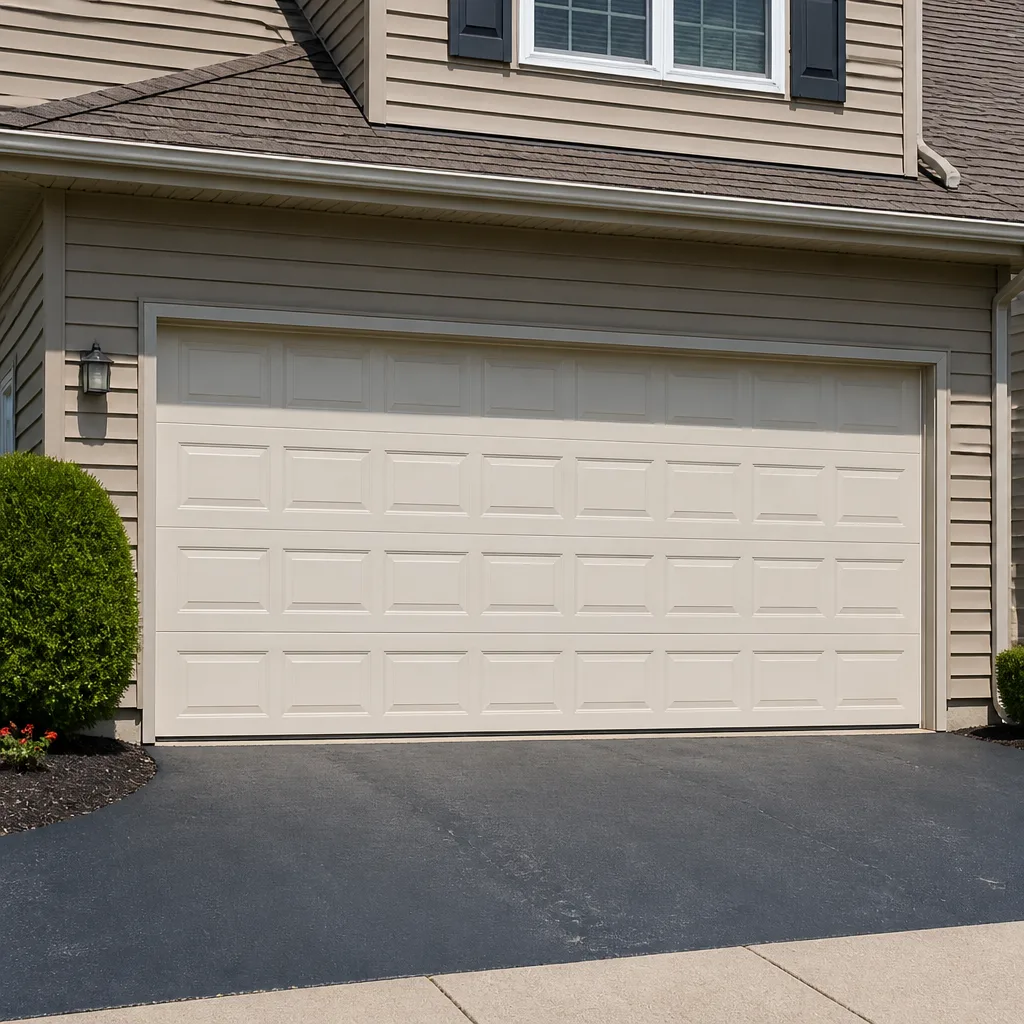 Raised-panel steel
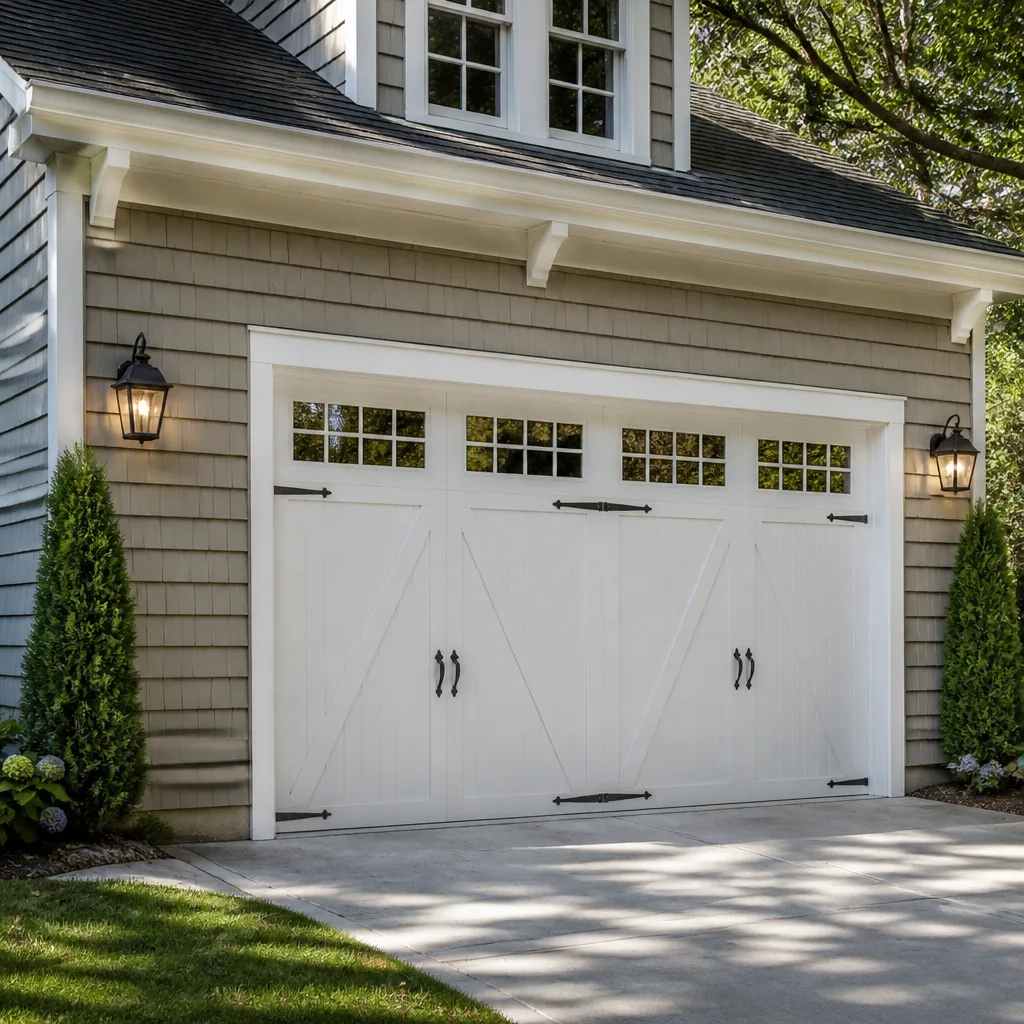 Carriage house
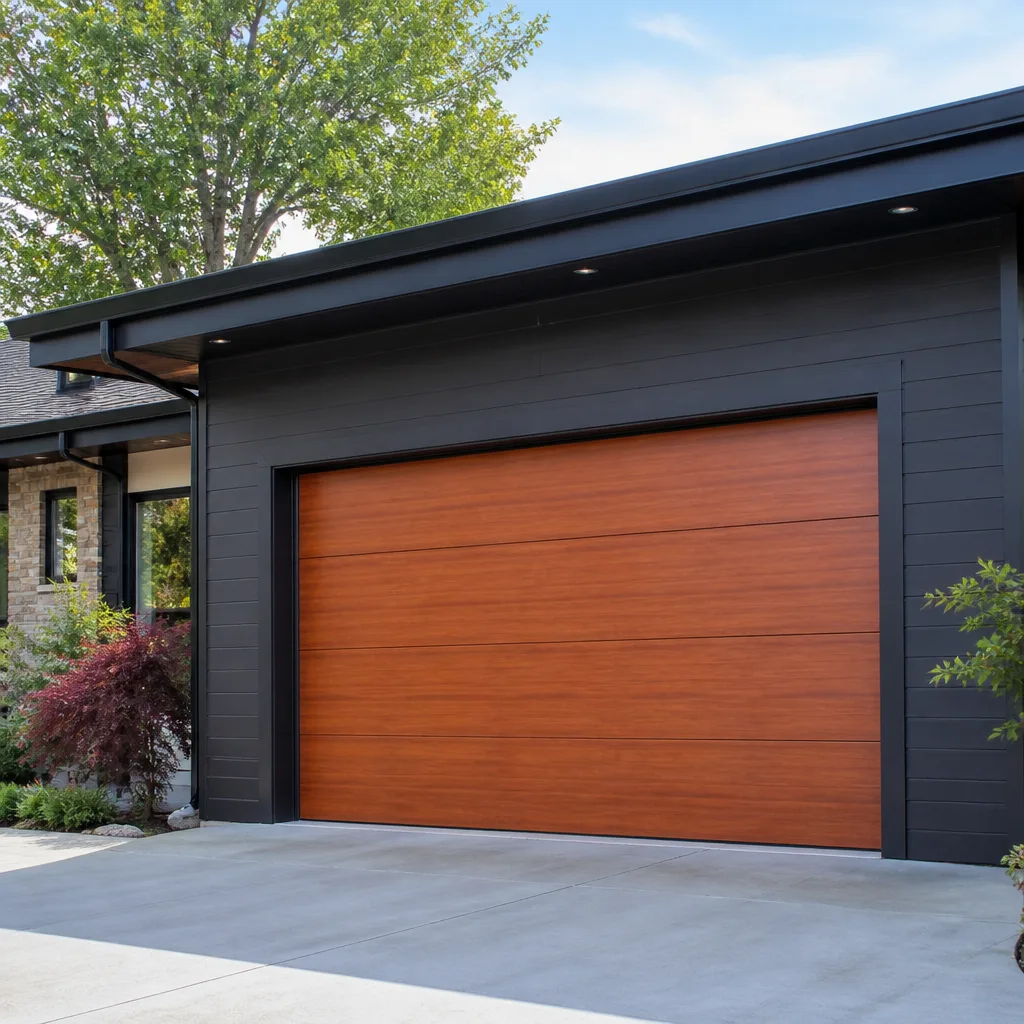 Modern flush
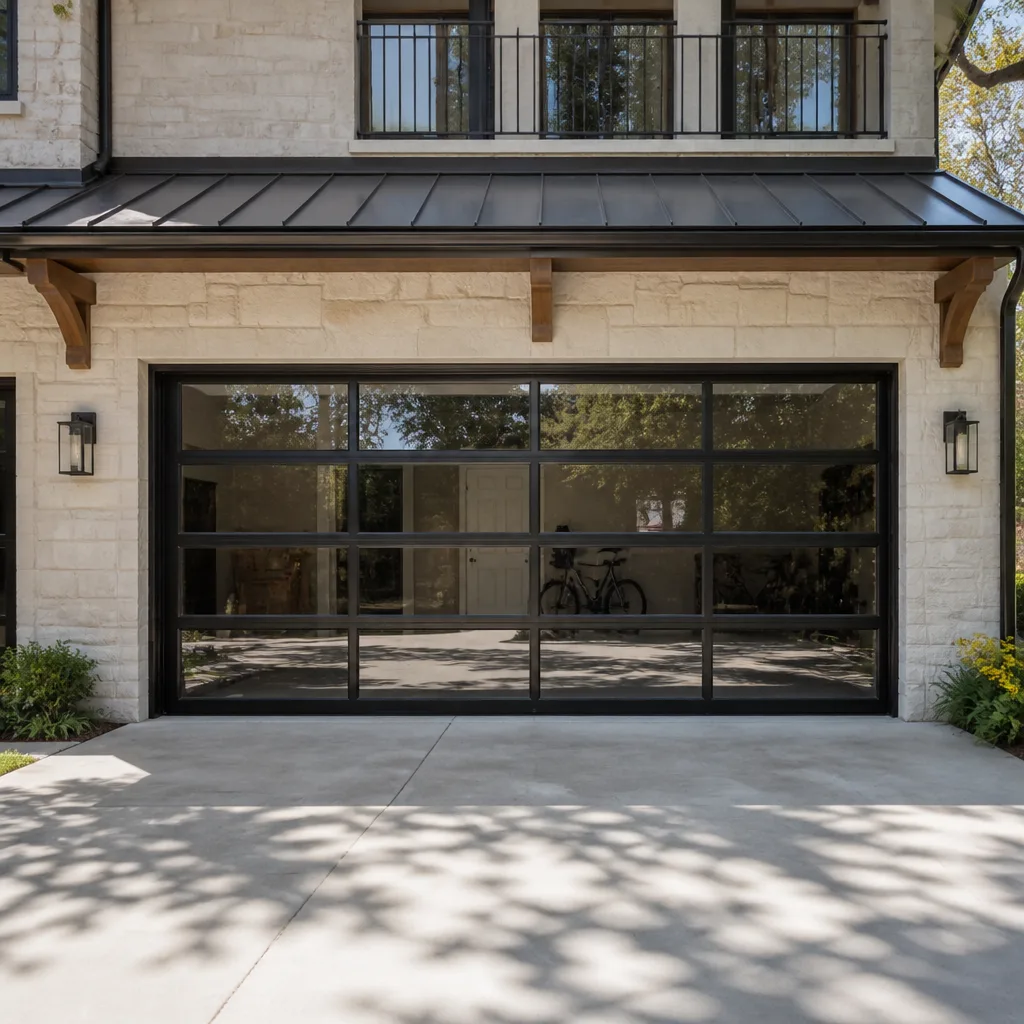 Full-view glass
 LiftMaster openers
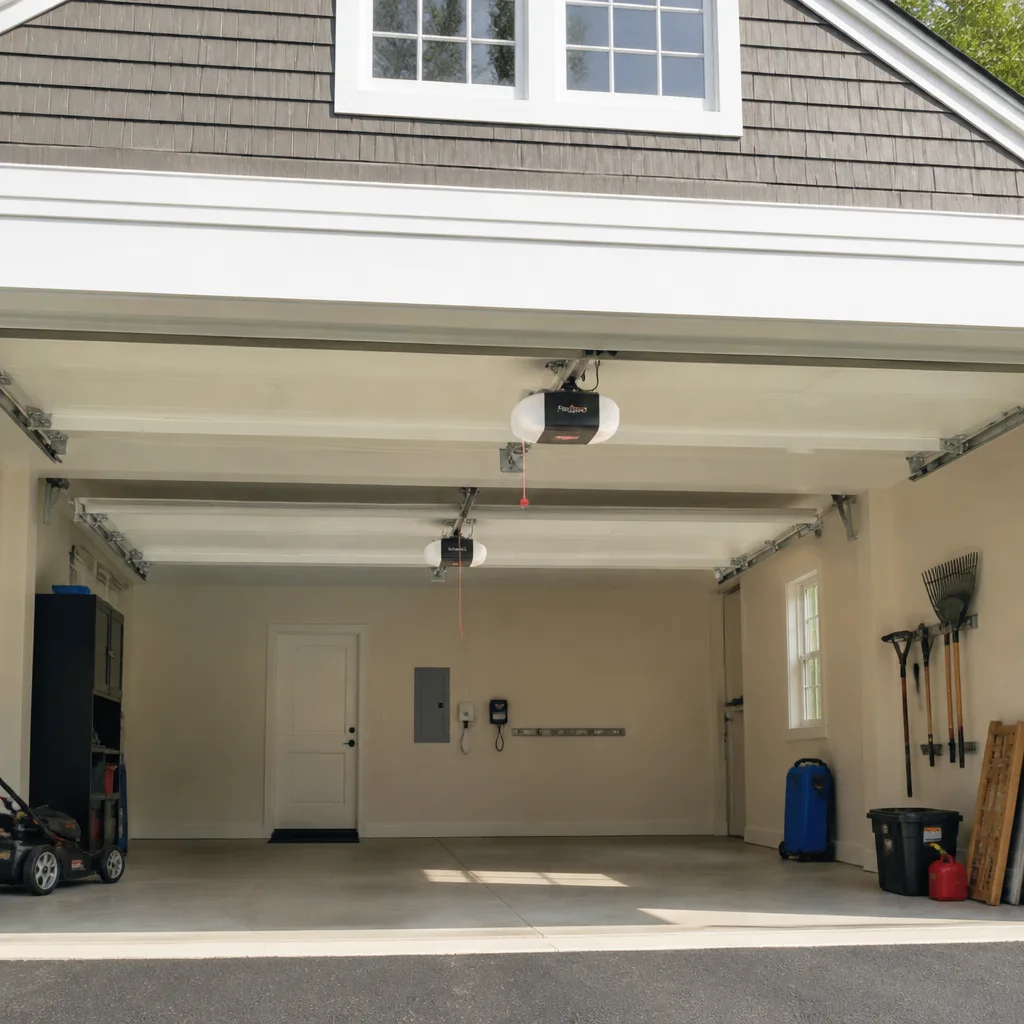 Chamberlain openers
Full 25-point door and opener safety check with every visit - springs, cables, rollers, tracks, and your LiftMaster or Chamberlain opener included
You get a price before we start. It does not change when the pro arrives.
Get your free estimateGarage Door Warning Signs: A Milford Homeowner’s Reference Guide
Most homeowners treat a noisy garage door the way they treat a rattle in the dashboard: turn up the radio and hope it fades. That’s the wrong instinct here. A garage door is a tensioned machine with a spring under enormous load, cables held by thin drums, and a track that has to stay true to within a fraction of an inch. The sounds and movements it makes before it fails are not random. Each one maps to a specific component, and each component has its own clock before it stops working entirely. The grinding noise isn’t just “a grinding noise” – its pitch, its timing, and where exactly it comes from point to one of several different parts, some of which can wait a month and some of which need the door closed to regular use today. This guide teaches you to read those signals the way a technician does. We’re Milford Garage Door Repair Pros, and we’ve walked through this diagnostic with Milford homeowners enough times to know which signs get missed and which get panicked over. By the end, you’ll know how to tell the difference.
Quick Answer
The most urgent garage door warning signs in Milford are a snapped torsion spring (a loud bang followed by a door that won’t lift), a door hanging off its track, and frayed or kinked cables – stop using the door immediately in all three cases. Grinding, squealing, and rattling are usually monitorable for a short window, but they point to parts wearing down and will escalate. There’s a simple rule: if the door moves unevenly, won’t stay up, or you can hear metal-on-metal under load, treat it as a stop-now problem. If it’s noise without loss of function, you have time to book a repair before it becomes one.
Styles & brands we work with
- Raised-panel steel
- Carriage house
- Modern flush
- Full-view glass
- LiftMaster openers
- Chamberlain openers
Table of Contents
- Why Warning Signs Are a Diagnostic Language, Not a Checklist
- The Sound-to-Component Matrix: What Each Noise Tells You
- Visual Signs We Look For in Milford Garages
- Is It the Opener, or the Door Itself?
- The One-Movement Test: Reading a Door That Resists in One Direction
- Stop Now vs. Monitor for 30 Days: Clear Criteria
- Seasonal Shifts and What Milford’s Weather Does to a Door
- When Warning Signs Mean Replacement, Not Repair
Why Warning Signs Are a Diagnostic Language, Not a Checklist
A checklist tells you a door has a problem. A diagnostic language tells you which problem. The difference matters because a door with a worn roller and a door with a failing cable can both “sound bad” – and one is a same-week repair while the other is a same-day stop.
Here’s how to think about it. A garage door has five main systems that generate warning signs:
- Springs – torsion springs above the door or extension springs beside it. They carry the door’s weight. They fail suddenly and dangerously.
- Cables and drums – the steel cables that transfer spring tension to the door. They fray and slip before they fail.
- Rollers and hinges – the pieces that let the door travel. They wear, dry out, and get noisy.
- Track and frame – the guide rails and the doorway they attach to. Misalignment here affects everything else.
- Opener and drive system – the motor and the chain, belt, or screw that pulls the door. It gets blamed for problems that start in the door.
Every warning sign belongs to one of these systems. When you hear or see something, your first job is to figure out which system it belongs to – not whether it’s “serious.” Serious is a judgment you make after the system is identified. A loud noise from the springs is a different kind of urgent than a loud noise from a dry roller, even though both sound alarming at the moment.
This is also why we ask homeowners for specifics when they call. “It’s making a noise” gives us very little. “It’s a metallic scrape that happens twice per cycle, starting about a foot off the ground, and it comes from the left side” tells us a great deal. That level of detail usually points straight to a worn roller, a dry hinge, or a cable rubbing where it shouldn’t. A trained ear can narrow the repair before anyone arrives. Our technicians have up to 9 years of experience reading these signals on the full range of residential systems – LiftMaster and Chamberlain openers, Clopay and Genie components, and the rest of the eight major brands we service. If you’re not yet sure what you’re hearing, a free estimate visit is the fastest way to put a name to it.
The Sound-to-Component Matrix: What Each Noise Tells You
Sound is the earliest and most reliable warning sign a garage door gives you. Human ears are good at detecting changes in pitch and rhythm, and a door cycles in a predictable pattern – typically a short run up, a pause, and a short run down. Any sound that departs from the pattern is worth decoding. Here’s how we break down the four most common sounds:
Grinding
A low, continuous grind is usually metal against metal. If it happens as the door first moves, it’s most often a dry or seized hinge or roller bearing. If it happens higher up, near the spring shaft, it points to a torsion spring that has lost some of its lubricity or a bearing plate that’s dry. Grinding is warn-and-monitor if the door still moves smoothly. It becomes urgent if the grind is accompanied by any shudder or if it’s noticeably louder than it was last month.
Popping
A single sharp pop, usually at the start or end of travel, is a classic extension-spring symptom – the spring catching on the track or an anchor point. On torsion systems, a pop can indicate a slip in the cable on its drum. Popping that repeats at the same point in travel is a stop-and-look sign; popping that happens once and never again is usually nothing.
Rattling
Loose hardware. Hinges, bolts, and the opener’s rail all develop play over time. Rattling is the least urgent sound on this list – it’s usually a tighten-and-lube fix – but it’s also the one homeowners ignore longest, and it can disguise a worn roller underneath.
Squealing
High-pitched, continuous squeal points to friction – most commonly dry rollers or a bent track that’s forcing the door to rub. Squealing can be monitored for a few weeks, but a bent track will accelerate roller wear until the door starts binding, so the sooner it’s diagnosed the cheaper the fix.
One important caveat: none of this matrix should tempt you to reach for a wrench on the spring system. Torsion springs store tremendous force, and adjusting or removing one without the right tools and training is how serious injuries happen. If your sound maps to a spring or cable, stop and call a professional. We can work through the sound matrix with you over the phone if you’re in Milford and unsure what you’re hearing.
Visual Signs We Look For in Milford Garages
Some failures announce themselves before they happen, and a walk-around with a flashlight once a season is enough to catch most of them. These are the four visual checks we run on almost every Milford door we look at.
Rust streaking on the floor below the door
A reddish or brown streak on the concrete just under the door, or rusty dust on the track, is a strong indicator that a cable drum is rusting or a cable is fraying. Cable strand failures shed tiny metal whiskers, and they show up as rust-colored dust. This is a stop-using-the-door sign because a failed cable can drop a door.
Daylight gaps that weren’t there last winter
Winter ground movement – freeze and thaw cycles common throughout Connecticut – can shift a door frame slightly. If you can see daylight around the edges of a closed door that was tight last year, the frame or the door’s bottom seal has moved. It’s not an emergency, but it’s a sign to have the door re-aligned before the gap widens and lets weather and small animals in.
Spring gap measurement
On a torsion spring, look for a visible gap between the coils. A healthy spring sits with a tight, even set of coils. A short or uneven gap can indicate the spring is winding down. An obviously open gap on one part of the spring is a stop signal. Never try to measure a spring by hand-turning it; a visual glance from a safe distance is all you need.
Panel and seal changes
Bent or creased bottom panels, a sagging top section, and a lifting weather seal all suggest impact or hinge failure. On a Clopay or Amarr door in Milford’s suburban homes, these checks are worth doing twice a year, because panel damage rarely fixes itself. For a full breakdown of what each panel issue means, see our garage door repair page, which walks through typical repair paths by symptom.
Is It the Opener, or the Door Itself?
This is the single most misdiagnosed problem we hear about. A door that won’t open is usually blamed on the opener – so homeowners replace a perfectly good LiftMaster or Chamberlain unit and find the new one behaves exactly the same. The opener only pulls; if the door itself is binding, the opener strains, the safety reverse trips, and the door goes back down.
Use this quick sequence to tell which system is at fault:
- Pull the emergency release. This disconnects the door from the opener and lets you move it by hand.
- Lift the door manually. A balanced door should move with modest effort and stay up partway without dropping.
- Feel for binding. If the door resists, tilts unevenly, or will not hold its position, the problem is in the door – spring, cable, roller, or track – not the opener.
- If the door moves freely, test the opener. Press the wall control. If the opener runs but the carriage doesn’t move, the drive is at fault. If it doesn’t run at all, the opener, sensor, or safety-reverse system is the place to look.
A more detailed version of this diagnosis lives on our garage door opener repair page, but the short version is this: never buy a new opener until you’ve confirmed the door isn’t the bottleneck. And if you’re hearing a grinding sound from the opener’s rail while the door moves smoothly, that points to the drive gear or the chain – a fixable opener issue, not a door issue. We service openers from Genie, LiftMaster, and Chamberlain, so we can sort it out either way.
The One-Movement Test: Reading a Door That Resists in One Direction
Doors that open without complaint but resist, or bind, when closing tell you something specific about balance. On a well-tuned door, the spring stores enough energy to make both directions feel the same. When they don’t, the door is out of balance, and the direction of the imbalance narrows down what’s wrong.
Here’s how to run the test, with the opener disconnected:
- Raise the door by hand roughly halfway and let go. It should stay in place. If it drops, the springs are weak or the door’s weight has changed – often from a new panel, new glass, or a different seal.
- Lower the door from the halfway point and let go. If it rises on its own, the spring tension is too high or the door has gotten lighter than the springs are set for.
- Watch the gap between the door and the track as it moves. A door that rakes slightly to one side as it rises and the other as it falls is a sign of a tilted panel, a bent track, or a snapped extension spring on one side.
An imbalance in one direction points to the spring or the panels. A resistance in one direction only points to a track or roller. Either way, the safety rule applies: never adjust spring tension yourself. A tensioned spring can release with enough force to cause serious injury, and a door that drops while your hands are under it is a hospital visit waiting to happen. This is the repair category that garage door spring repair exists for, and we handle it with the appropriate tools and pre-tensioning procedures every time.
Stop Now vs. Monitor for 30 Days: Clear Criteria
Not every warning sign is a crisis. But some are. Here are the lines we draw, and we’d suggest you draw them the same way.
Stop using the door immediately if any of these are true:
- You heard a loud bang from the garage and the door no longer opens or opens only with help.
- A torsion or extension spring is visibly broken, with a gap in the coil or a separated section.
- A cable is hanging, kinked, or visibly frayed.
- The door is off its track, or rollers are out of the guides.
- You can see through the door to the outside along a panel edge that was sealed before.
- The door hangs unevenly when closed.
You can monitor the door for about 30 days if all of these are true:
- The door still moves smoothly and holds its position when stopped partway.
- The noise is present but hasn’t gotten worse over the last week.
- Nothing is visibly loose when you lightly push on panels or hinges (with the door closed and untouched by hands on moving parts).
- The opener isn’t straining or reversing.
The 30-day window is a booking window, not a snooze button. If you’re in Milford and you’ve decided to monitor, book the inspection in the same week so a technician can get eyes on it. If you’re near the stop-now list and you’re unsure which side of it you’re on, call us and we’ll walk through the symptoms with you. (855) 764-1660.
Seasonal Shifts and What Milford’s Weather Does to a Door
Milford’s mix of humid summers and hard winter freeze-thaw cycles is rough on garage door hardware. The parts most affected are cable drums, springs, and the bottom weather seal, and each shows its wear in a different season.
- Late winter and early spring – after a hard freeze, check for daylight gaps around the sealed door and listen for rattles near the hinges. Frozen ground shifts frames, and doors that were tight in the fall often aren’t by March.
- Spring and summer humidity – rust develops quickly on the cable drums and internal spring hardware. Look for rust streaks below the door and rusty dust on the track. A quick lubrication of rollers and hinges (not the spring itself) is usually enough to slow this down. Our Milford Garage Door Repair Pros team handles these checks during any service visit.
- Fall – the season for panel and seal checks. Wood and seals contract, small gaps appear, and every few years the door’s balance shifts. Run the one-movement test in October and again in January; if the door’s behavior changes between them, that tells you a lot.
If you’ve noticed seasonal noise getting louder year over year, it’s not imagination. It’s the mechanical parts slowly losing tolerance, and it’s a good argument for an inspection before the first hard freeze.
When Warning Signs Mean Replacement, Not Repair
Most warning signs are repair signals. A few are replacement signals. The dividing line:
- Consistent recurring failures across different parts of the door over a short period, suggesting the door has aged past the point where individual component repair is economical.
- Panel damage on a door whose model line is no longer made – a common situation with older Clopay and Wayne Dalton doors, where matching a damaged section isn’t possible.
- Structural sag in the door itself, not just the track.
- A door that’s too heavy for its opener and can’t be balanced without replacing the door’s components.
When a replacement is the right call, the choice of system matters as much as the price. If you’re planning a first-time replacement, a free measure with a written estimate is the right starting point – not a same-day promise. A new door has to be ordered, delivered, and scheduled. We install Clopay, Amarr, Wayne Dalton, and Raynor and can walk through styles, insulation levels, and opener compatibility before anything is ordered. When the time comes to book, our repair and installation team covers the full job from measure to final adjustment.
Common Mistakes to Avoid
- Blaming the opener first. Nine times out of ten, a door that won’t open has a door problem, not an opener problem. Pull the release, test the door by hand, then look at the opener.
- Adjusting the spring yourself. Torsion and extension springs are under extreme tension. This is the most dangerous repair in the entire system. If your sound or visual check points to the spring, stop and call us.
- Greasing the track. Track and springs don’t need grease; rollers, hinges, and the opener’s screw or chain drive do. Greasing a track can actually attract grit and cause binding on a Milford door in a sandy garage or a street-facing bay.
- Ignoring rust streaks. Rust dust below a drum is a cable warning. Most cables that fail have given that sign for weeks before they let go.
- Assuming a quiet door is a healthy door. A door can be badly out of balance and nearly silent. The one-movement test catches problems the ear misses.
- Buying a new opener when the door is the problem. A new opener on a misaligned door behaves exactly like the old one did. Test the door first.
- Waiting past the 30-day window. A monitored problem that gets louder means the window has expired. Call us for a free estimate visit before the part fails entirely.
See the difference
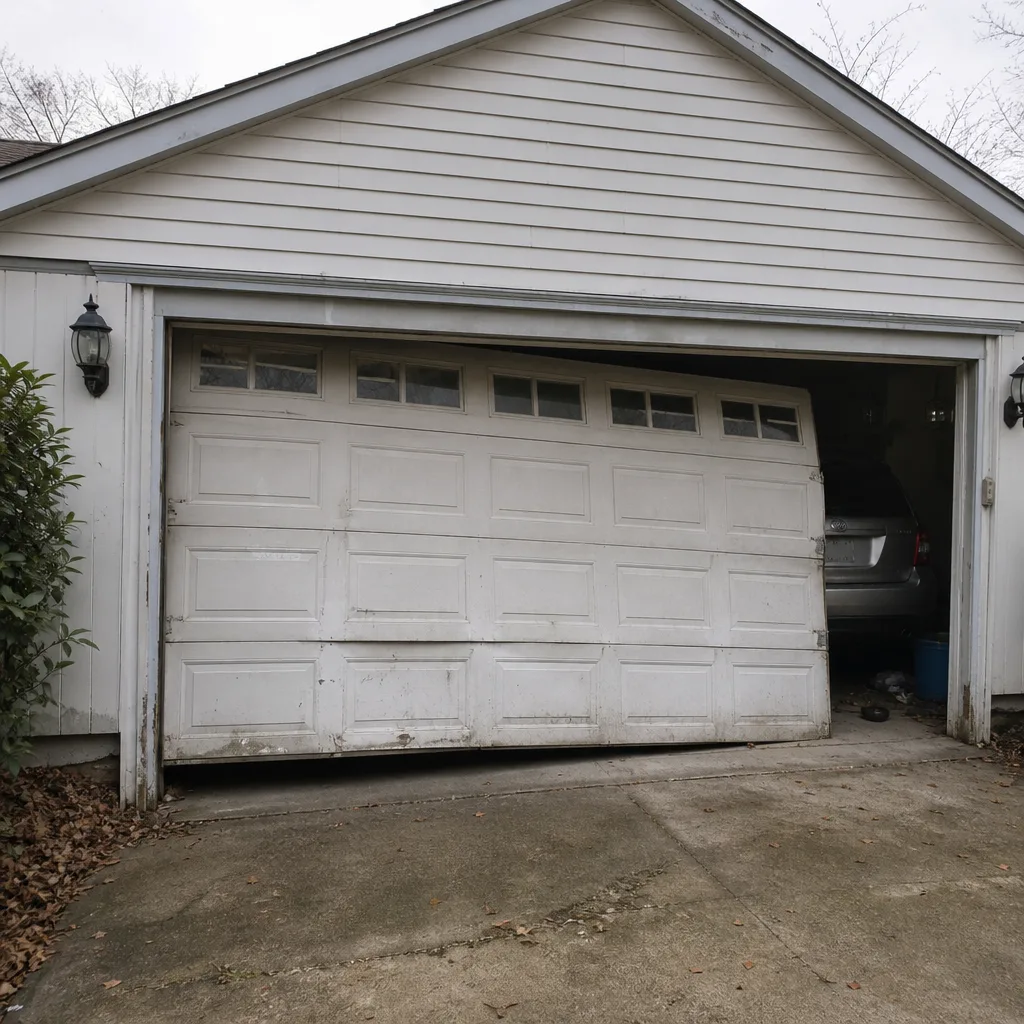 Before
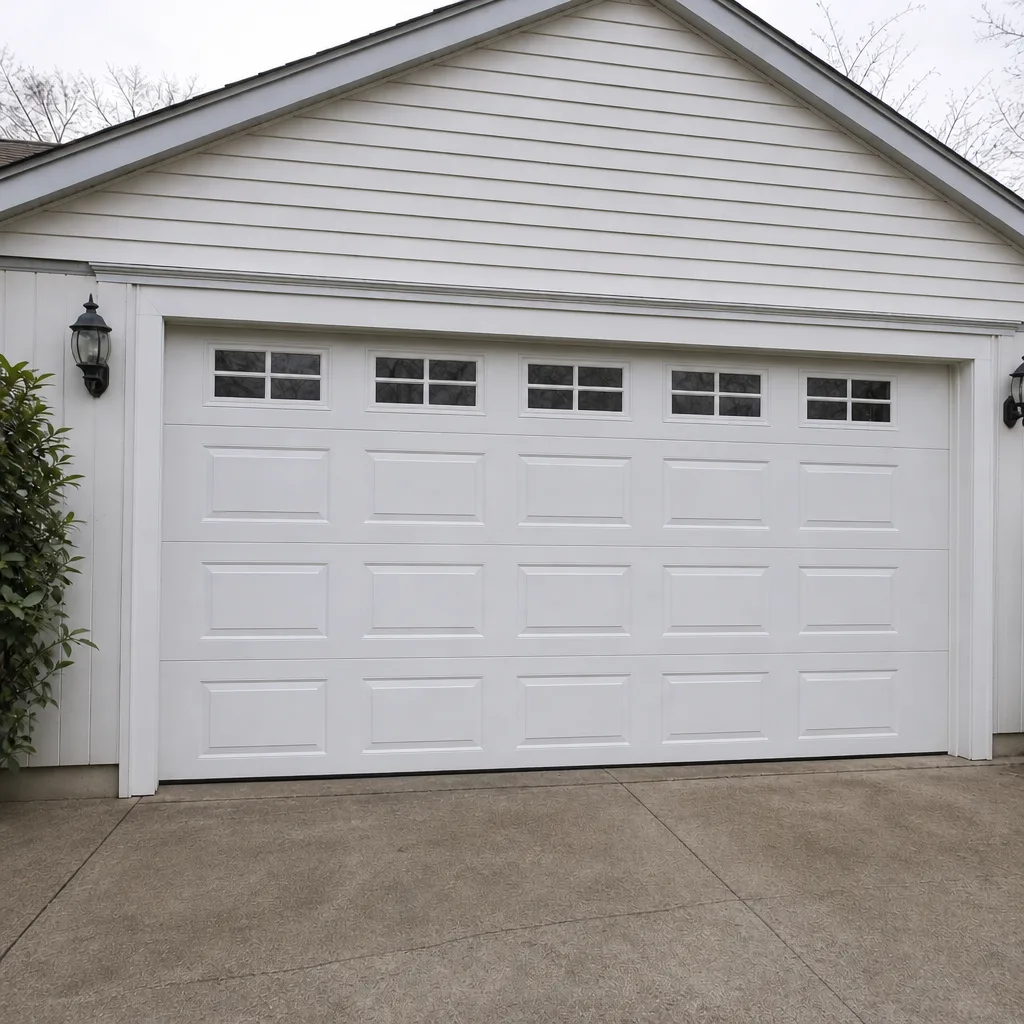 After
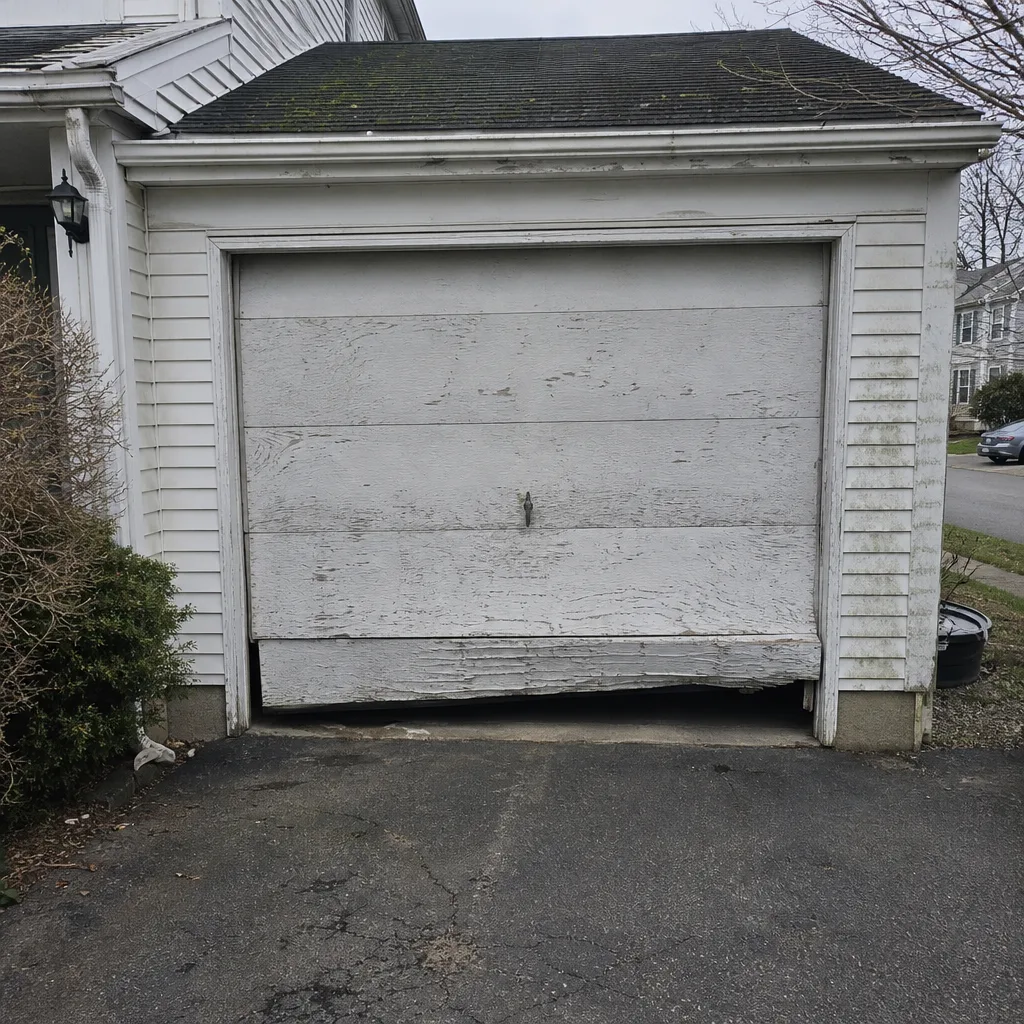 Before
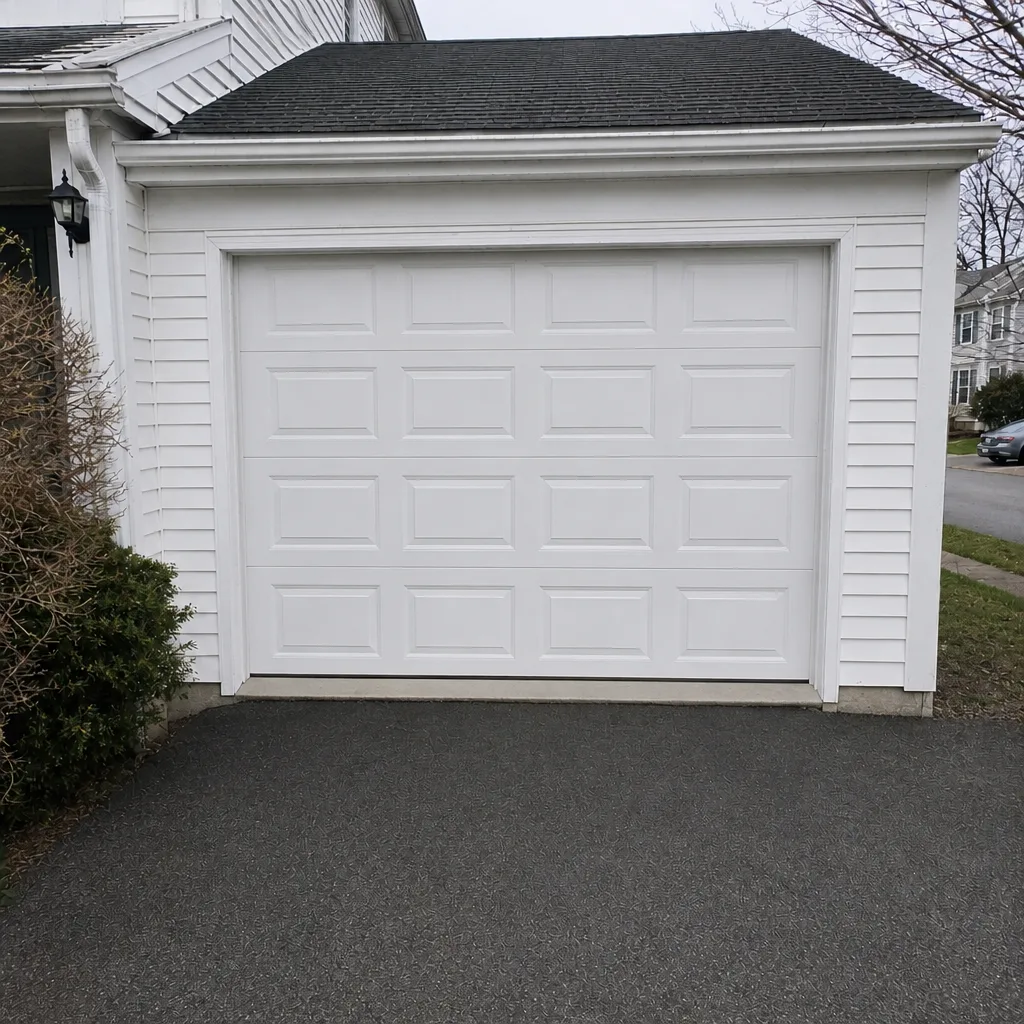 After
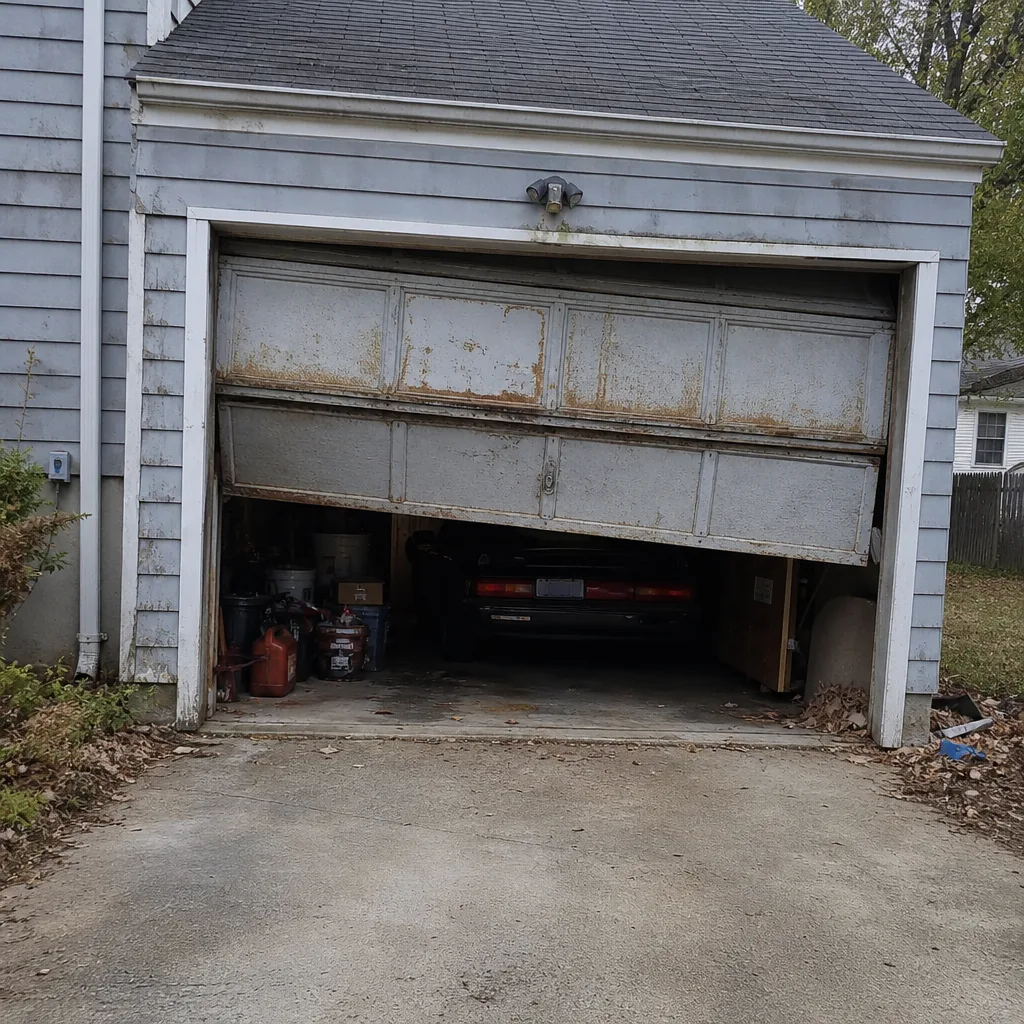 Before
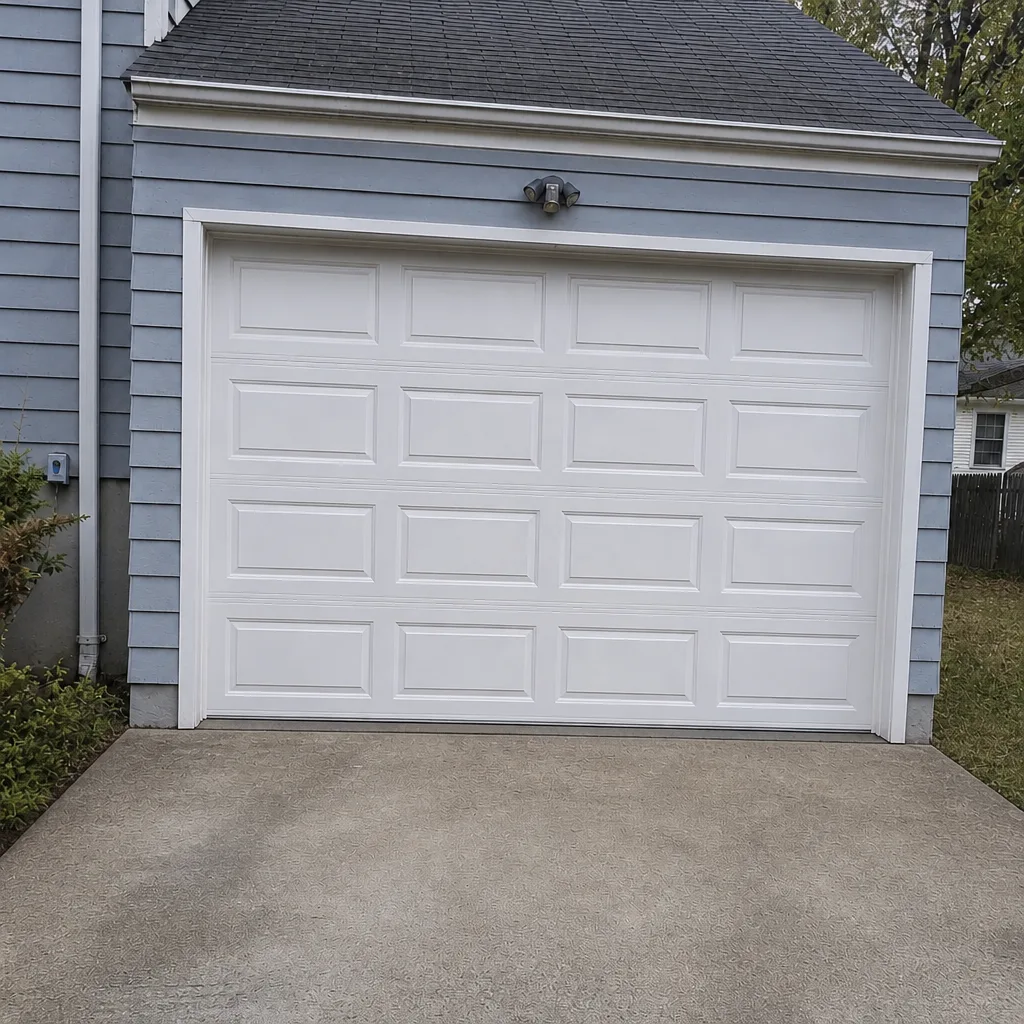 After
When to Call a Professional
Call a professional any time the door is a spring, cable, or track problem, if the door is off its track, if the opener reverses without obstruction, or if a new panel or door needs matching. And call immediately if you’ve heard the loud bang of a spring letting go and the door is stuck.
Milford Garage Door Repair Pros offers free estimates in Milford – call (855) 764-1660. Our technicians have up to 9 years of experience and work on the full range of LiftMaster, Chamberlain, Genie, Clopay, Amarr, Wayne Dalton, Craftsman, and Raynor systems. We’ll give you a written estimate before any work starts, and the written estimate sets the price.
Frequently Asked Questions
A loud bang followed by a door that won’t open. That’s the classic sign of a snapped spring. Stop using the door immediately and call (855) 764-1660 – do not try to open it by hand or with the opener.
Most repairs triggered by the warning signs in this guide come in under $250 – roller, hinge, and lubrication fixes are usually on the low end; spring repairs and cable replacements cost more. The exact price depends on the door, the brand, and the part. Call (855) 764-1660 and we’ll give you a written estimate before we start.
Often, yes. A metallic grind from the roller level, a pop from the spring or cable, a rattle from loose hardware, and a squeal from dry rollers or a bent track each have distinct signatures. A phone call with a description of the timing and location of the sound usually narrows the diagnosis before we arrive.
Squealing and rattling are usually safe to monitor for about 30 days. Grinding that gets louder or is accompanied by shudder is a matter of weeks. Any popping or rust dust under the door is a same-week call – those are cable and spring warnings.
Yes. If a broken door leaves your home unsecured or your car trapped, call (855) 764-1660 and we’ll book emergency service as a standing capability, not an upsell. It’s core to what we do.
Yes. We service LiftMaster, Chamberlain, Genie, Clopay, Amarr, Wayne Dalton, Craftsman, and Raynor. Our technicians work on the system already on your home – you don’t need to switch brands to get service.
Four things: rust streaks below the door, daylight gaps around the closed door, the coil condition on the spring from a safe distance, and the one-movement test with the opener released. This takes about ten minutes and catches most of the warning signs in this guide.
The written estimate sets the price. If we find something during the inspection that wasn’t visible before, we’ll show you and quote it separately – no surprise invoice.
The Bottom Line
Every warning sign your garage door gives you is a message about one specific component, and the job of this guide is to teach you to read those messages. Grinding points to rollers and bearings. Popping points to spring and cable. Rust dust points to a cable drum. Daylight gaps point to frame shift. An imbalance in one direction points to spring or panel issues. Two categories matter most: stop now if the door is unsafe to operate, and monitor for 30 days if it still works smoothly. Either way, book the repair before the window closes. Milford Garage Door Repair Pros is here to help – (855) 764-1660, free estimates, written pricing before any work starts.
Written by the team at Milford Garage Door Repair Pros.